Most of us have been guilty of it. Showing up for a cause on a Saturday, helping for a few hours, posting about it, and going home feeling like we did something real. It seems like everyone's social impact experience begins this way. The distinction we see in young changemakers is when they cannot ignore the fact that every other day of the week, help is still needed.
Any step toward something bigger than yourself counts. No one at Udayaa is going to tell you your first attempt did not matter.
But Udayaa was built to inspire a new generation to create lasting, meaningful change. For people who want to stop being one-time volunteers and start being social entrepreneurs. This is the playbook for how to do that. The shift is not complicated once you see it. The idea is to stop addressing what the problem looks like and start addressing why it exists.

The work that lasts looks less dramatic than a one-day event. It also changes more.
Ask the root cause question first
Before you decide what your campaign does, ask one question: if this works exactly as planned, what is different in six months? If the answer is nothing structural, the campaign is treating a symptom. That is not nothing, but it is not the same as addressing the cause.
A child who gets notebooks today needs notebooks again next term. A woman who sits through a menstrual hygiene awareness session still needs supplies next month. A family that receives buttermilk during a heatwave is still living somewhere with no shade, no clean water, and no shoes.
The root cause question changes what you build. Here is what that looks like across three areas where student campaigns are most common.

Planning a campaign that lasts takes longer. It is the only kind worth planning.
What this looks like when it runs for years
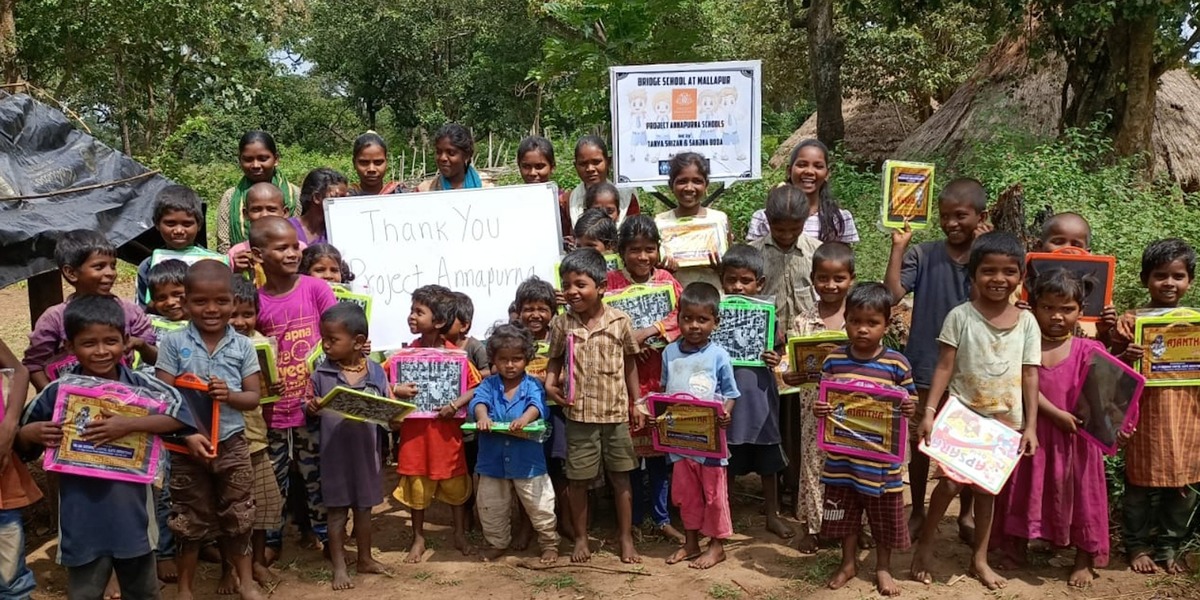
Project Annapurna has been running monthly programs for tribal communities across Telangana and Andhra Pradesh for eight years. In the first five months of 2026, the medical camps reached 1,458 patients, gave antenatal care to 648 pregnant women, and treated 270 malaria cases across 24 villages.

Medical camp, Telangana. January to May 2026: 1,458 patients reached across 24 villages.
Girl Up Apara, a student-led campaign out of Chirec International School, sourced and donated sewing machines to a women's shelter this year. Women with nowhere else to go now have a way to build an income from a room where they are finally safe. That is not a good deed. That is a different life.
Saamarthya Foundation runs a separate program supporting children with autism through therapy that their families could not otherwise afford, in communities where that specialist care simply does not exist nearby. For some of those children, early intervention changes their entire developmental path. The window for it is narrow. A program that disappears after one cycle means that window closes.

Saamarthya Foundation: therapy sessions for children with autism in communities where specialist care does not otherwise reach.
On photography and proof of impact: a photograph of a one-day distribution looks identical to a photograph of month eight of a sustained program. The camera cannot tell you which one changed anything. Udayaa stopped measuring success by the photo a long time ago. If a campaign reached 40 families, we say 40 families. Not "hundreds of lives transformed." Real numbers are enough.
You do not need to have a campaign to have this conversation
If any of this sparked an idea, whether or not you are ready to run a campaign, we want to talk. Bring us the problem you care about. We will help you think through what the root cause actually is and what a sustainable response to it looks like. No pitch required. No strings attached.
Book a free brainstorm call with the Udayaa team. We will help you figure out what your campaign could actually change, and how to build it to last.
Book a call with us